4 min read

Mood Board to Reality: How Our Designers Bring Your Vision to Life

Mood Board to Reality: How Our Designers Bring Your Vision to Life
7:00

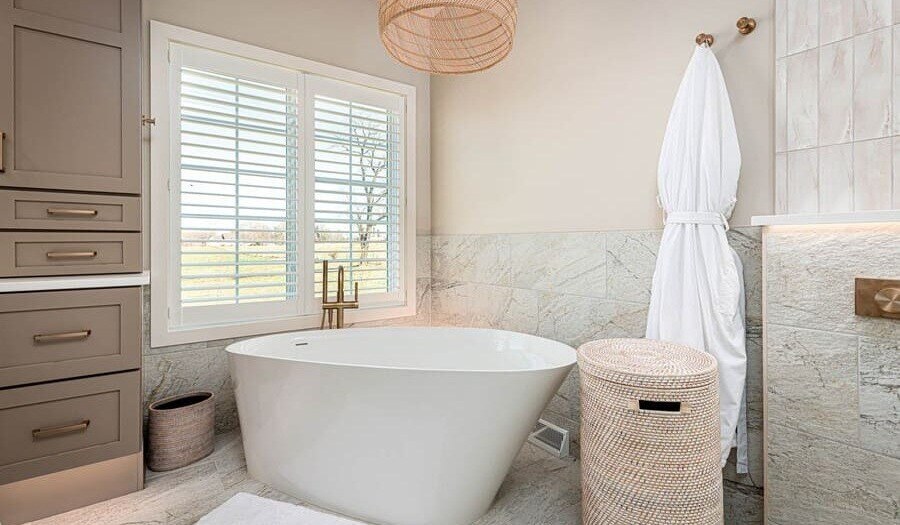
It’s a common scenario: a homeowner is preparing for a remodel and dreaming of what their home can become. They start saving images they love on Pinterest, Houzz, from magazines—wherever they find inspiration. These photos are great and valuable for setting the direction a home remodel will take and helping homeowners communicate their preferences.

But what’s next? How do those ideas turn into an actual kitchen, bathroom, basement, or whole-home remodel? Enter the remodeling designer. Her role is to take that inspiration and—in collaboration with the homeowner—create a cohesive, buildable design.

So how do professional remodeling designers turn a homeowner’s vision into reality? By working with the homeowner’s vision, preferences, and inspiration to create a cohesive design plan including finish selections, layouts, and more.

5 Steps from Mood Board to Finished Remodel:

  1. Discovery and Goal Setting
  2. Inspiration Gathering
  3. Design Development
  4. Material and Finish Selection
  5. Construction and Installation


How Does the Designer Turn My Ideas into Mood Boards?

The process starts with conversations. Your designer will talk to you about your ideas, plans, and goals for your home remodel. You’ll be able to share your inspiration photos. And don’t worry if you can’t name a specific design style you like. The images you save might look different at first glance, but they will likely share common elements, like brass hardware, warm colors, or a particular pendant style. Your designer will look for patterns, helping you identify those underlying preferences and turn them into a cohesive design you love.

You don’t need to have all the answers when you start this journey. It’s our job at McLennan Contractors to guide you through every step.


Step One: Starting the Conversation

  • We start with what we call a Programming Meeting. This is where you will discuss your ideas and desires.
  • Your designer will be ready with a list of questions to talk through with you, like “Do you prefer wood or painted cabinets?” and “What style of cabinets do you like?”
  • If you already know the answers, that’s great. If not, that’s ok too, and your designer will make a note of that.
  • During this meeting, you’ll talk through the basics of every fixture and finish in your remodel. This gives your designer a pretty clear idea of what you’re after.


Step Two: Creating Mood Boards

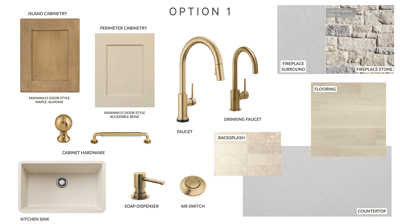
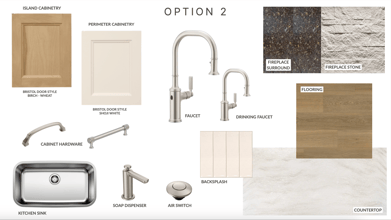
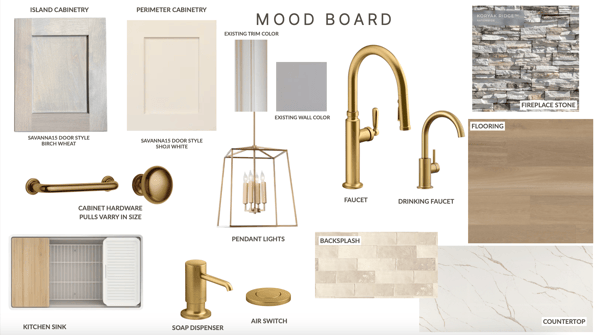
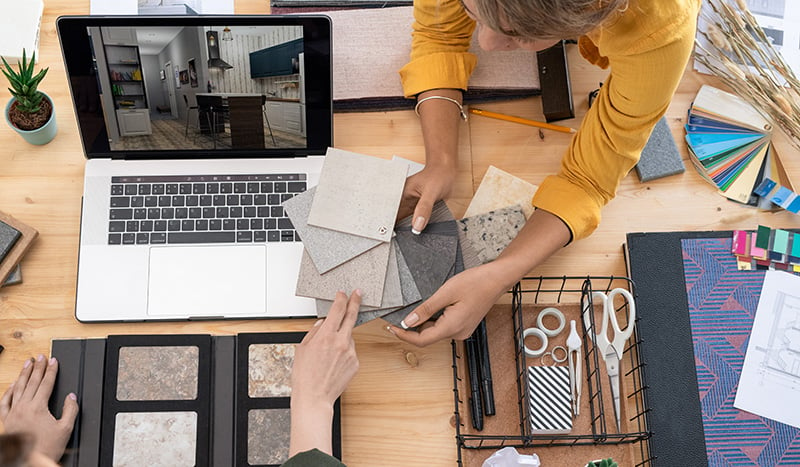
Next, your designer will take all the information she’s learned from your conversations and your inspiration photos and create at least two, sometimes more, mood boards for your project.


              Screenshot 2026-08-24 at 5.43.28 AM       Screenshot 2026-08-24 at 5.43.39 AM


What’s a Remodeling Mood Board?

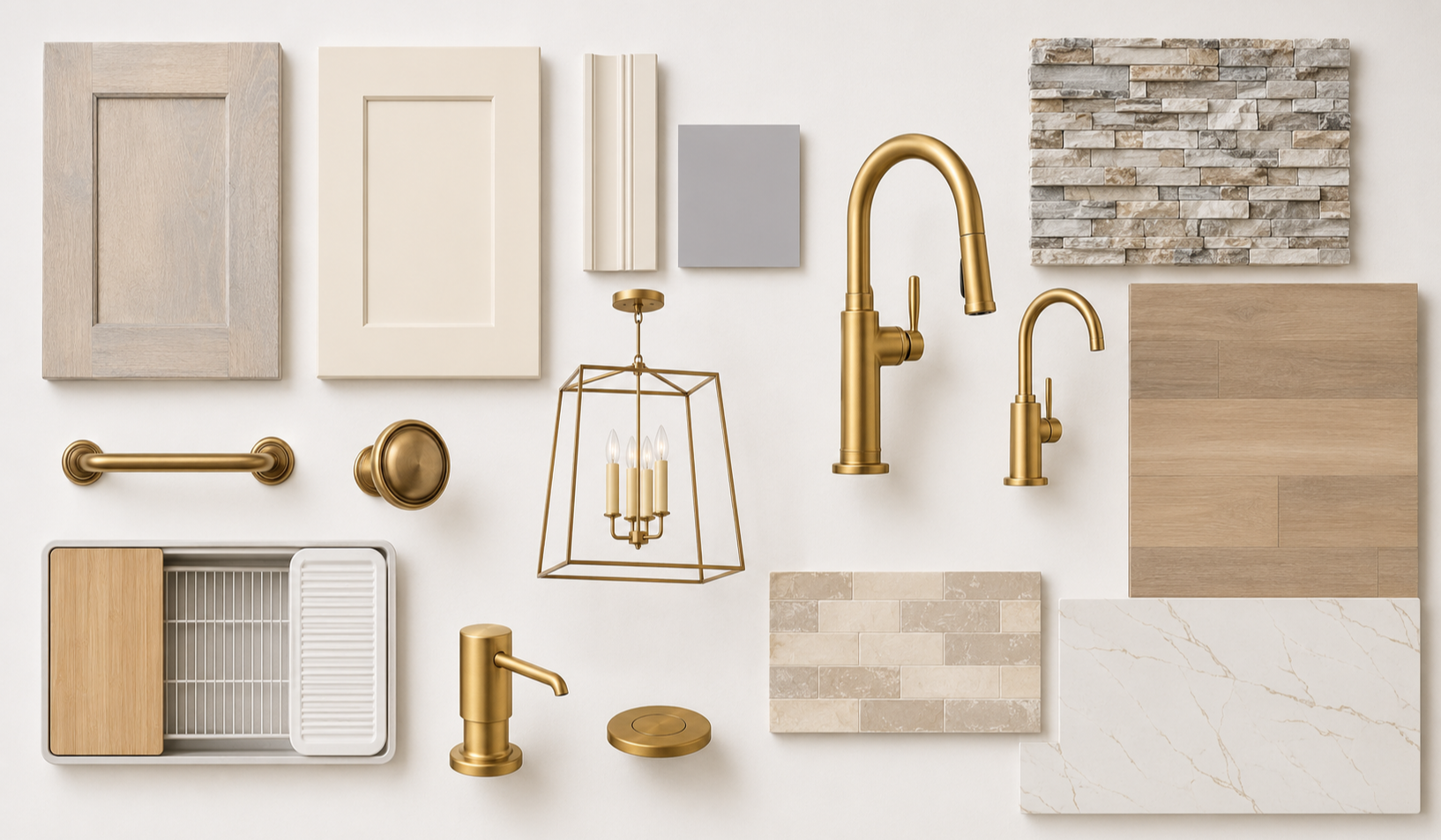
A remodeling mood board is a collection of images, materials, colors, and design inspirations that help communicate the look and feel a homeowner wants to achieve in their remodeled space.

Each mood board could include:

  1. Cabinetry finishes
  2. Backsplashes or tile
  3. Flooring
  4. Countertops
  5. Paint colors
  6. Light fixtures
  7. Hardware
  8. Plumbing fixtures
  9. Sinks
  10. And more!

The designer will create multiple mood boards to help you compare designs. You can understand visually how individual finishes work together, and you may very well end up liking the flooring from board #1 and the paint color from board #2. Multiple remodeling mood boards let you see your options and how they work together.

These selections aren’t random! Your designer will source materials based on

  • the conversations they’ve had with you.
  • what they know you will like based on your inspiration photos.
  • specific products and availability, so you know exactly what you’re getting.

Your vision is gaining structure and specificity, and that’s an exciting step!


Screenshot 2026-08-24 at 5-42-44 am

Step Three: Finalizing the Remodeling Mood Board

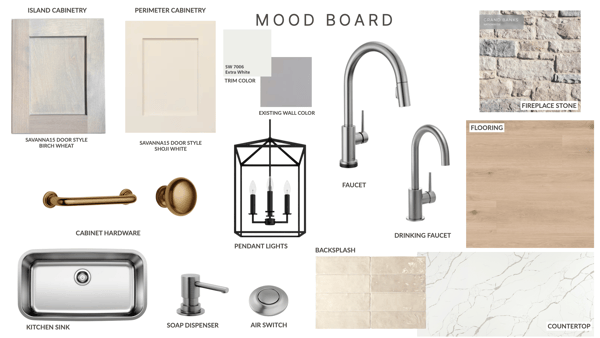
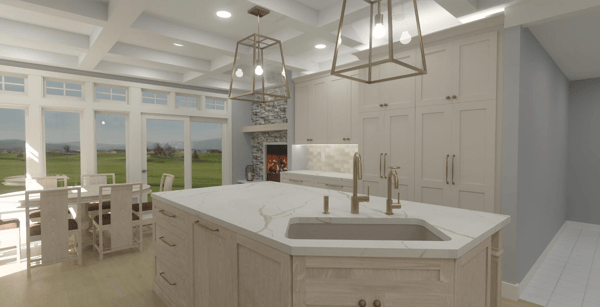
Based on your choices and feedback, your designer will combine the elements you’ve chosen into a final mood board. This is the design development phase, where you can really start to see progress and your dreams begin to take shape.


Screenshot 2026-08-24 at 5.42.59 AM


I Have My Mood Board—What’s Next?

Now that you’ve got a great visual idea of what your remodel will look like, and you’ve made some selections, you might be asking, “What happens after I choose my finishes?” The next steps in the remodeling design process move you from mood board to construction plans.

  • Refine the selections for materials and finishes. With the help of your Lancaster remodeling designer, you will choose all the finishes, colors, and materials for your remodel. This might seem overwhelming, but your designer will walk you through it step by step.
  • Finalize materials. Your designer will source specific elements for your mood boards, so there won’t be an issue with actually finding the products you choose.
  • Develop the layout. The design team will determine how the space will actually function. This will include elements like cabinet and appliance locations, lighting, storage, flow, and more.
  • Create drawings and specifications. The designer translates all these pieces of the puzzle into one cohesive plan that communicates to the construction team exactly what needs to be built.

Screenshot 2026-08-24 at 5.48.47 AM


Why Design-Build is the Right Choice

When you choose a Lancaster design-build firm like McLennan Contracting, you’re choosing a team that already knows how to work together—and does it well. Our designers and builders communicate with each other, collaborate to solve any problems that come up, and come up with creative ideas together. Design-build means a clear and easy process, a great experience, and a final product you love.


Preparing For Construction

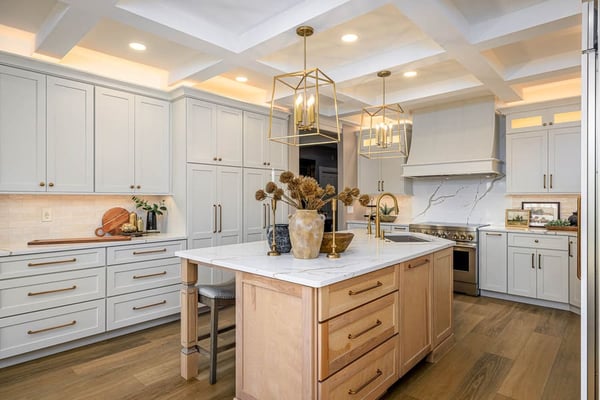
Now that the design is finalized and the selections are made, the construction team has a roadmap for the home remodel of your dreams. And you have confidence that everyone is on board with your vision.


Lititz-Kitchen-Remodel-9


The Benefits of Working with a Professional Designer

Using a home remodeling design service—especially when the designer collaborates so thoroughly with you throughout the process—comes with a variety of advantages, including

  1. Your ideas become cohesive through this mood-board-to-construction process.
  2. You’re given curated choices in styles your designer already knows you’ll like. This cuts down on decision fatigue.
  3. You can visualize the finished space and make changes before construction begins.
  4. There will be fewer mistakes and change orders, since potential issues are uncovered early in the process.
  5. You have an expert to help you make decisions, so you can be confident in your choices.

Your inspiration pictures set the direction. The mood boards gave shape to your vision. The design and construction plans showed the team exactly how to bring it to life. From start to finish, you and your designer collaborate to personalize your home remodel and make it perfect for you and your family.

If you’re ready to start the process, contact us today and let’s set up a Discovery Call. We’re ready to get to work for you.

New call-to-action


Pinterest Blog (7)-1


Mood Board to Reality: How Our Designers Bring Your Vision to Life

Mood Board to Reality: How Our Designers Bring Your Vision to Life

It’s a common scenario: a homeowner is preparing for a remodel and dreaming of what their home can become. They start saving images they love on...

Read More
Best Fall Events in Lancaster, PA (2026)

Best Fall Events in Lancaster, PA (2026)

Pumpkin patches, corn mazes, and apple cider, oh my! Fall is on its way to Lancaster County. Accompanying the cooler weather and changing leaves,...

Read More
Why You Can't Have the Lowest Price, the Highest Quality, and the Fastest Timeline in Remodeling

Why You Can't Have the Lowest Price, the Highest Quality, and the Fastest Timeline in Remodeling

Everyone wants the same thing when planning a remodel: exceptional quality, a quick turnaround, and a great price. Unfortunately, those three things...

Read More
What Is Design-Build Remodeling? (And Why It Matters for Your Lancaster Home)

1 min read

What Is Design-Build Remodeling? (And Why It Matters for Your Lancaster Home)

Design-Build is the fastest-growing method of remodeling project delivery in North America, for one reason: it works.

Read More
The Benefits of a Detailed Remodeling Plan: Preventing Cost Overruns

1 min read

The Benefits of a Detailed Remodeling Plan: Preventing Cost Overruns

When you decide to remodel your home, you’re choosing to invest in it. You are making it better–a better fit for your family and needs, a better...

Read More
Integrating Innovation: How Design-Build Leads to More Creative Solutions

1 min read

Integrating Innovation: How Design-Build Leads to More Creative Solutions

When you begin the process of remodeling your home, you will be hit with a variety of decisions to make, everything from the scope of the remodeling...

Read More