6 min read

Everything You Need to Know About Kitchen Cabinets

Everything You Need to Know About Kitchen Cabinets
12:07

The Short Answer

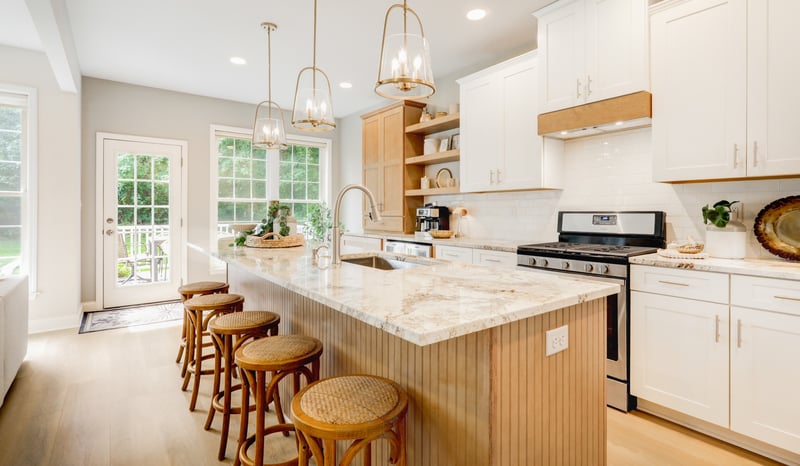
Choosing the right kitchen cabinets involves more than just picking a color or style. From cabinet types and construction to materials, hardware, and storage features, there’s a lot to consider. Understanding your options can help you choose cabinets that balance style, functionality, quality, and budget for your kitchen remodel.


Starting a kitchen remodel is exciting—and it can be overwhelming. One of the biggest elements of your new kitchen will be the cabinets. They serve important roles:

  • functionality (providing storage, organization, and making your kitchen easy to use)
  • aesthetics (helping to create the room’s style and feel, making your vision for the space come to life).

There are so many options available for kitchen cabinets. Do you want stock or custom? Framed or frameless? Soft-close hinges? Shaker doors? Where do you even start? If you’re feeling overwhelmed, we’re here to help. We’ll break down the main types of cabinets, the styles and materials you need to understand, and help you feel confident in your decisions for your Lancaster kitchen remodel.

What Should Homeowners Know Before Choosing Kitchen Cabinets?

The best kitchen cabinets for your remodel perfectly balance appearance, functionality, quality, and budget. What do you need from your cabinets? When you work with a design-build company, your kitchen designer will be there to help you decide.


Think about the following:

  • The kitchen layout: The size and configuration of your kitchen will influence the type of cabinets you need, their dimensions, and what storage needs you will have.
  • Storage: Think through what you need to store, based on your lifestyle and your family’s needs. Consider everyday dishes and cookware, special occasion items, appliances, and hobby items.
  • Kitchen workflow: With your designer’s help, think about the way you use your kitchen. Do you only ever have one cook at a time? Does your family like hanging out in the kitchen with you? Do you need more prep space? These workflow questions will help determine which cabinets will serve you best and where to place them.
  • Design preferences: What style of kitchen do you like best? What cabinets will look great with the countertops, flooring, and backsplash you love?
  • Durability and budget: Choose cabinets that are built to last and fit your budget.


What Are the Main Types of Kitchen Cabinets?

It’s important to get clear on your plans for the home: Do you plan to sell your home in the immediate future? Is this your forever home? 

There are three primary cabinet categories to choose from, and they all have benefits and drawbacks. Understanding the basics will help you decide what’s best for you.


Stock Cabinets

These ready-to-go cabinets are produced in standard sizes that fit most general kitchen configurations. They are

  • mass-produced, which means they are readily available with little to no wait time.
  • built in fixed dimensions and come in three-inch increments, meaning they can’t be customized to fit exact measurements.
  • typically the most affordable option.
  • great for straightforward kitchen layouts but may not accommodate more unusual or custom spaces.
  • limited in materials and styles.
  • often made from particleboard or composite wood and are less durable over time.


Semi-Custom Cabinets

A good middle ground, semi-custom cabinets start with standard box sizes and dimensions but allow for more customization than stock cabinets. They

  • offer more flexibility than stock cabinets but are usually more affordable than fully customized cabinets.
  • come in different finishes, door styles, dimensions, and modifications, making it easy to get what you want.
  • have more size options and come in ¼ inch increments, meaning you can use them in less-standard kitchen layouts.
  • are often made from a more durable combination of wood and plywood.
  • are more affordable than custom cabinets, but more expensive than stock cabinets.


Custom Cabinets

The most bespoke option, custom cabinets are designed and built for your exact kitchen. They can accommodate any layout and space to a fraction of an inch. Custom cabinets

  • offer the greatest flexibility in terms of dimensions, layout, materials, finishes, and more.
  • can support specialized storage needs.
  • are great for unusual layouts or designs, and for maximizing every inch of usable space.
  • are the most expensive option and have the longest lead time since the cabinets are being built from scratch.
  • are often more durable, but durability depends on the individual builder. If you work with a reputable design-build company, you can be sure they source their cabinetmakers carefully.

In the end, the right choice for your kitchen cabinets depends on a variety of factors: your layout, your budget, the style you want, and how customized you need them to be.


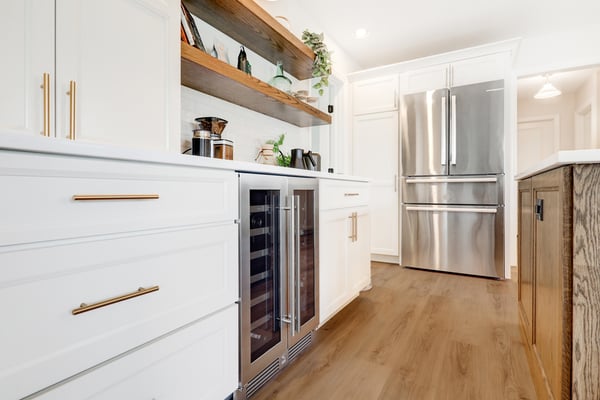
Manheim-Township-Whole-Home-Remodel-042


Understanding Cabinet Construction: Framed vs. Frameless Cabinets

Kitchen cabinets fall into one of two construction methods: framed and frameless. Understanding the differences will help you choose which type you prefer.


Framed Cabinets

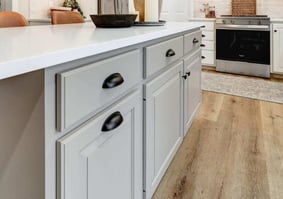
Framed cabinets, also called face frame cabinets, are the more common and traditional style. They feature a frame attached to the front of the cabinet box. The doors’ hinges attach to the frame. Doors can overlay the frame fully or partially, or be inset (more on this in the next section below).

Framed cabinets are a great look for a traditional or transitional kitchen. They are more forgiving on slightly uneven walls. On the downside, they do have smaller door and drawer openings since the frame overlaps the opening a bit.


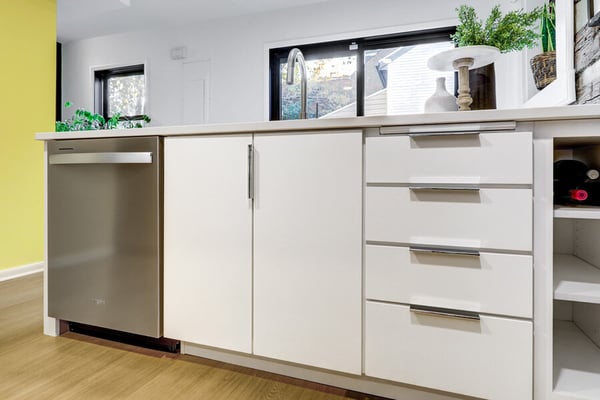
Landisville-Kitchen and Living Room-Remodel-21


Frameless Cabinets

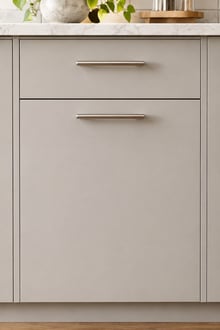
Also called European-style cabinets, this more modern design does not have a face frame. Instead, doors attach directly to the cabinet box sidewalls. This gives a clean, streamlined, minimal appearance that works especially well in contemporary and modern kitchens.

Frameless cabinets require tight and precise squaring and installation, and they give you maximum interior space in the cabinets and drawers. They are usually more expensive than framed cabinets.


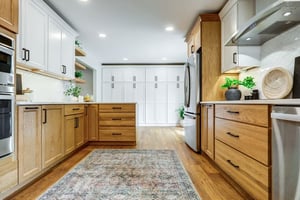
Lancaster-Historic-Home-Remodel-33


Is framed or frameless best for you? It depends on the look you’re going for, your budget, and your preferences.


Cabinet Doors: How Do Inset, Overlay, and Door Styles Differ?

Kitchen cabinet doors are designed to fit onto the cabinet box or frame in a few different ways.

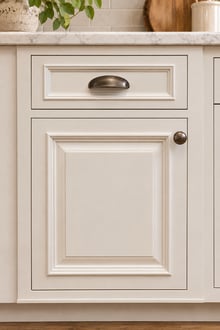
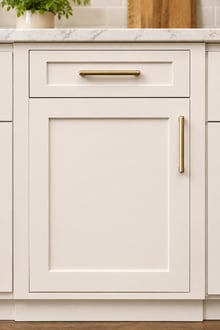
  • Inset: Doors and drawer faces sit flush inside the cabinet frame. This creates a clean, minimal design that has a furniture-like appearance. Inset doors and drawers are harder to install and a bit more expensive.
  • Full overlay: Doors and drawer faces cover nearly the entire cabinet face, leaving minimal gaps between them. This gives a streamlined appearance.
  • Partial overlay: The most traditional (and budget-friendly) option, the doors cover part of the cabinet frame, leaving some of the frame visible.

        c5ad8752-3675-42fe-bb25-802e10258467-1  Landisville-Kitchen-Remode-35  Conestoga-Valley-Kitchen-Remodel-18

Cabinet doors are arguably the most important design feature of the cabinet. The doors you choose will set the tone for your Lancaster kitchen remodel. Some popular styles include

  • Shaker: Simple, clean lines and a recessed center panel. This style is very versatile, looking great in traditional, transitional, and contemporary kitchens alike.
  • Slab or flat panel: Smooth, flat fronts that create a clean, minimal, modern look.
  • Raised panel: A more traditional look. These doors feature a raised center panel with decorative detailing.
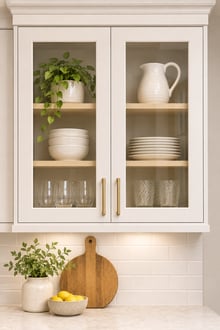
  • Glass front: Glass panels are used to display dishes or to create visual interest. Glass fronts are often used along with another style to visually break up a bank of cabinets.

  47aa507f-a305-4195-affe-043fea811df6    482cbf1c-3b3c-4419-a385-956edbe8cfc2.   9690f884-9892-4002-9b2f-86049d73d851.   382dad56-be07-443b-9b41-803bcdca310c


Construction, Hardware, Special Features, and More

While the look of your kitchen cabinets is important, the construction and hardware you choose will impact how well the cabinets hold up to everyday use.


Cabinet Boxes and Material

There are a variety of types of materials used for kitchen cabinets. Material quality, thickness, and proper installation all contribute to durability.

  • Plywood: Made of thin layers of wood veneer glued together. Plywood is very durable, resists moisture, and holds screws and hinges well. It’s best for high-end kitchens and frameless cabinets.
  • Particleboard: Made by compressing wood particles and covering the surface with laminate or melamine. This is a budget-friendly option and does well as long as it’s kept dry—it can warp or swell when wet.
  • Medium-Density Fiberboard (MDF): Made of fine wood fibers compressed into a smooth board. MDF is extremely smooth and great for painted surfaces. It’s heavier than plywood and is often used for backs and sides of cabinet boxes.
  • Specialty plywood (like Baltic birch): A high-grade plywood that is very strong and has a clean edge. It’s often used for specialty cabinets and drawers.


Hardware

The obvious hardware that comes to mind with kitchen cabinets is the pulls or handles. And while those are important (functionally, but mostly aesthetically), the hinges and drawer glides are equally vital to cabinets that work well.

  • Soft-close hinges and glides: These prevent cabinet doors and drawers from slamming shut. This reduces noise and wear.
  • Drawer glides: Speaking of glides, getting high-quality full-extension glides allows drawers to open fully, making for easier access.
  • Hardware quality: Make sure all hinges, glides, and other moving components are durable and built to last. While this may seem like a small thing, hardware that works well makes for a much better experience long-term in your kitchen remodel.


Storage Features

Thoughtfully designed storage features will make your kitchen more organized and functional. While your designer will have some ideas specific to your space, here are some options to consider:

  • Deep drawers. Great for storing pots, pans, mixing bowls—and even dishes! These can be easier to access than traditional lower cabinets, especially for heavier or bulky items.
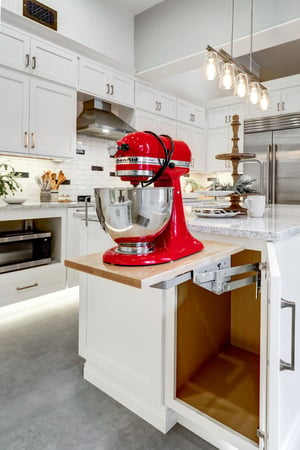
  • Pull-down shelves. Make your kitchen more accessible. Pull-down shelves make it easy to reach items stored in upper cabinets, especially if you have high ceilings.
  • Lazy Susans. By using these in corner cabinets, you eliminate hard-to-reach areas and wasted space.
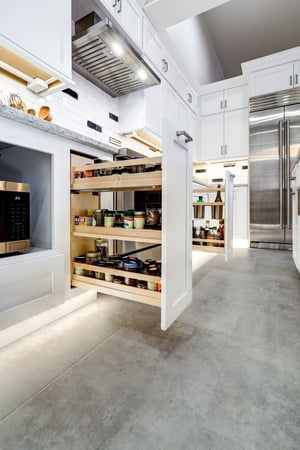
  • Pullout organizers. Everything from roll-out shelves to spice racks to tray dividers makes it easy to organize your cabinets and make the most of every inch of space.
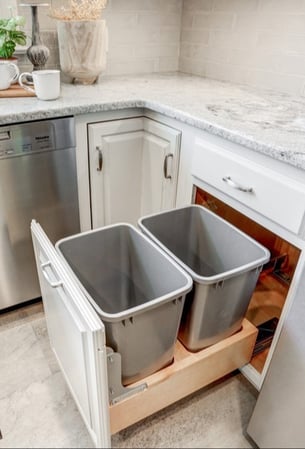
  • Pullout trash cans and recycling bins. Keep trash bins out of sight but easily accessible by building them into your cabinets.
  • Custom drawer inserts. Use these to organize cutlery, utensils, and more in your drawers.

Remember that the best storage solutions are the ones tailored to you and the way you use your kitchen. Discussing your needs and wants with your designer will help her know how to plan the perfect kitchen remodel for you.


Lancaster-Kitchen-Remodel-19.  Lancaster-Kitchen-Remodel-29  Conestoga-Valley-Kitchen-Remodel-01-1


Choosing the Right Kitchen Cabinets

There’s a lot to consider when deciding on kitchen cabinets for your Lancaster kitchen remodel. It’s more than just choosing a color and style. The way your cabinets look and function in your space will set the tone for the aesthetics and functionality of your kitchen—it’s a big decision.

A professional kitchen designer from a design-build company like ours can help determine the best cabinet type for your layout and budget, advise you on styles and finishes, and help you compare materials, construction, and features. She can also identify opportunities you may not have considered to maximize storage and functionality. And she will present you with a curated list of options, preventing overwhelm and decision fatigue.

Your cabinet selection should fit seamlessly into your final kitchen design, and a design-build team can ensure this happens. If you’re ready to begin a kitchen remodel, let us help you make confident, informed decisions that will lead to the kitchen of your dreams—one that looks beautiful and supports you in your everyday life. Schedule a consultation today.


New call-to-action


Pinterest Blog (19)-1


The 2026 Guide to Christmas Activities in Lancaster

It's the most wonderful time of the year, and this guide to family-friendly Christmas activities in Lancaster, PA will help make your season merry!
Read More

Debunking 5 Myths Around Resale Value

Does remodeling really increase your home’s value? We debunk 5 common myths about resale value, ROI, and what makes a remodel truly worth it.

Read More

The 3 Most Expensive Remodeling Projects (That Have Nothing to Do with Your Budget)

The most expensive remodel isn’t always the one with the biggest price tag. Learn 3 costly remodeling mistakes and how thoughtful planning can help.

Read More